

On Monday morning, I opened ChatGPT and Midjourney with ambition to ask AI to help me design a small and beautiful narrative game. I think I can finally relax and let AI be responsible for conceiving the plot and characters. I’ll do some fine-tuning. As a result, three days later, I shouted at the screen, “Can you play according to common sense”, and my mother carefully asked me outside the door if I wanted to drink some chrysanthemum tea to reduce the fever.
The cooperation was quite pleasant at the beginning. I told AI that I wanted a warm story about “memory and forgetting”, and it immediately gave three complete outlines. I chose one of the settings about the antique shop owner regaining childhood memories. In the store illustrations generated by Midjourney, each antique has a soft luster, and the lines on the wooden counter are clearly visible. At that moment, I felt that I had found the best work partner, and even began to plan how to thank this AI assistant after the game was launched.
But soon things went off track. I asked AI to refine the conversation of the antique shop owner, and it suddenly made the character start talking about quantum physics. I tried to get the conversation back on track, but the next time it was generated, the boss actually began to recite Neruda’s poems. The most outrageous thing is that when I asked to generate a simple basement scene, Midjourney gave me a strange image full of eyes, which completely deviated from the warm nostalgic style I wanted.
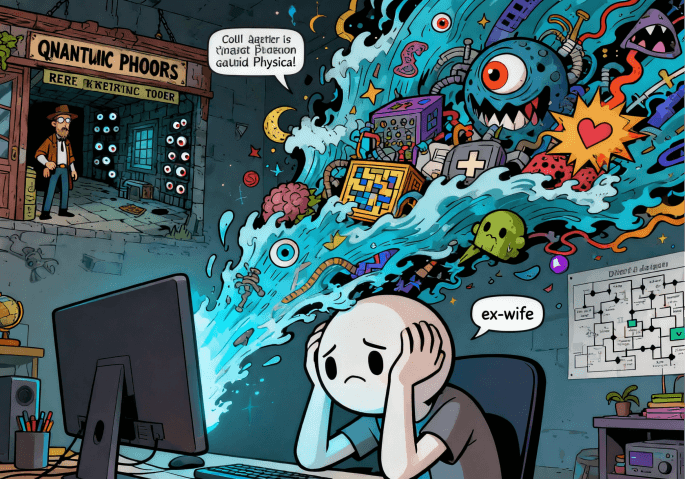
I almost collapsed on Wednesday. I asked AI to design a puzzle-solving link that requires players to find the hidden key in the antique clock. As a result, the puzzle logic chain it generates is ridiculously long, and it needs to open seven hidden organs one after another and solve a calculus problem. I stared at the flowchart for half an hour and finally decided to rewrite this part by myself. And when I tried to make AI simplify the process, it gave an overly simple version - it only takes three clicks to pass the customs, which is not challenging.
What really drives me crazy is the character setting. I clearly asked that the supporting actor was a silent old craftsman, but the opening line given to him by AI was a 500-word inner monologue. What’s more terrible is that every version of the old craftsman is talking about his failed marriage, which is out of the warm tone I set. I have modified the prompts more than a dozen times in a row, from “Please reduce emotional catharsis” to “Please don’t mention his ex-wife anymore”, but AI can always find a way to bring the topic back to emotional trauma.
By Friday, I was able to predict where AI would be on a whim. Every time I see the prompt “Generating” flashing, I hold the mouse nervously. It is like an assistant who is full of creativity but does not read the instructions at all. Sometimes it surprises me, such as designing an exquisite mechanism to trigger memory through smell; sometimes it makes me laugh and cry, such as insisting that all the characters open a cafe at the end.
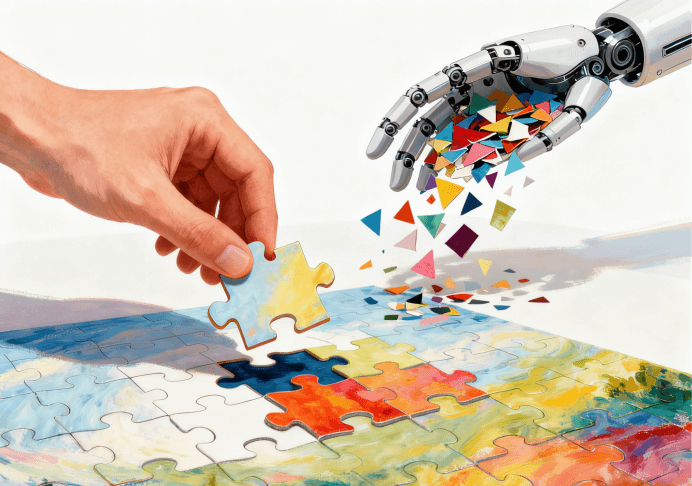
At the end of this week, I looked at the final version of the game design document and felt mixed. AI does provide many creative directions that I have never thought of, but it takes far more energy than I expected to integrate these fragmented inspirations into a coherent whole. Maybe the current AI is not a qualified planning partner, but it does make me rethink what is the irreplaceable part of human designers - the grasp of the overall atmosphere, the control of the emotional rhythm, and most importantly, knowing when to stop in moderation.
If you also want to try to cooperate with AI to design games, I suggest that you prepare enough patience and hypotensive Tea. After all, when you face a creative partner who never knows how to be tired but doesn’t know when to stop, the biggest challenge may not be technology, but your blood pressure. Have you ever encountered the moment of being driven crazy by AI? I wonder if I’m the only one who is so embarrassed when working with these digital brains.